

Our gardeners have experienced some of the best tomato growing conditions in a long while following months of moderate temperatures and substantial rainfall events. This followed a late and hard frost in March that frosted buds and blooms on some of our fruit trees, landscape plants and unprotected early planted veggies.
The wet and cool conditions have surprised many of us, and we are seeing more diseases developing recently. Early blight and some bacterial blights are the most common on tomatoes and have progressed well up into the vines. The bottom leaves to about 1.5-2.0’ above the soil line should routinely be removed as blight spreads rapidly following diseases originating from soil splash. Free airflow around the plants is the key and necessary to check disease development. The heat will soon put an end to successful tomato fruit set.
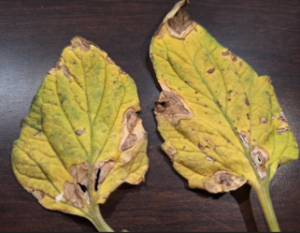 Photo of tomato leaves showing yellowing (chlorosis) and the concentric rings diagnostic of early blight Bacterial blight symptoms have similar dark lesions but without the concentric rings. (Pastushok 2026).
The spring tomato growing season in Williamson County is rather short and will come to an end very soon. Average daily high temperatures are now in the 90’s. This is the temperature when normal plant pollination stops, ending further tomato production. Early blight also has been more of a problem recently with the wet spring and moderate temperatures. Older leaves tend to be yellow and exhibit large lesions. I suggest discarding infected leaves as these are the source of disease spores that will infect your next tomato crop.
The good news is that our second planting of tomatoes for the year will be in July.
The summer and fall season allow for a long growing season, such that you can choose a late maturing variety with much higher yields. It is not too late to start your tomato seeds right now and plant them outdoors when the vines reach about 6” height.
A couple of tips. Make sure that you allow for a period to harden the plants prior to setting them in the ground, which better prepares them to cope with the heat stress in July and August. Our most experienced tomato growers use shade cloth (40%) which is designed to reduce the intense light and baking temperatures. Mulching heavily is also a critical step to insulate the roots to keep them cool and conserve soil moisture. You may need to provide more water or utilize other water saving techniques to produce a bountiful fruit set before the first fall freeze. Our warm soil and air temperatures favor rapid growth. Under extremely hot conditions the tomato plants may slow their development, however once the days cool in late summer these longer maturity varieties have plenty of time and suitable conditions to produce a very heavy fruit set.
July is the time to plant seeds of corn, eggplant, okra, and southern peas, or transplants including peppers, eggplants, and winter squash. Happy Planting!
Share This Story, Choose Your Platform!