

GROUND COVER PLANT OPTIONS FOR SHADE
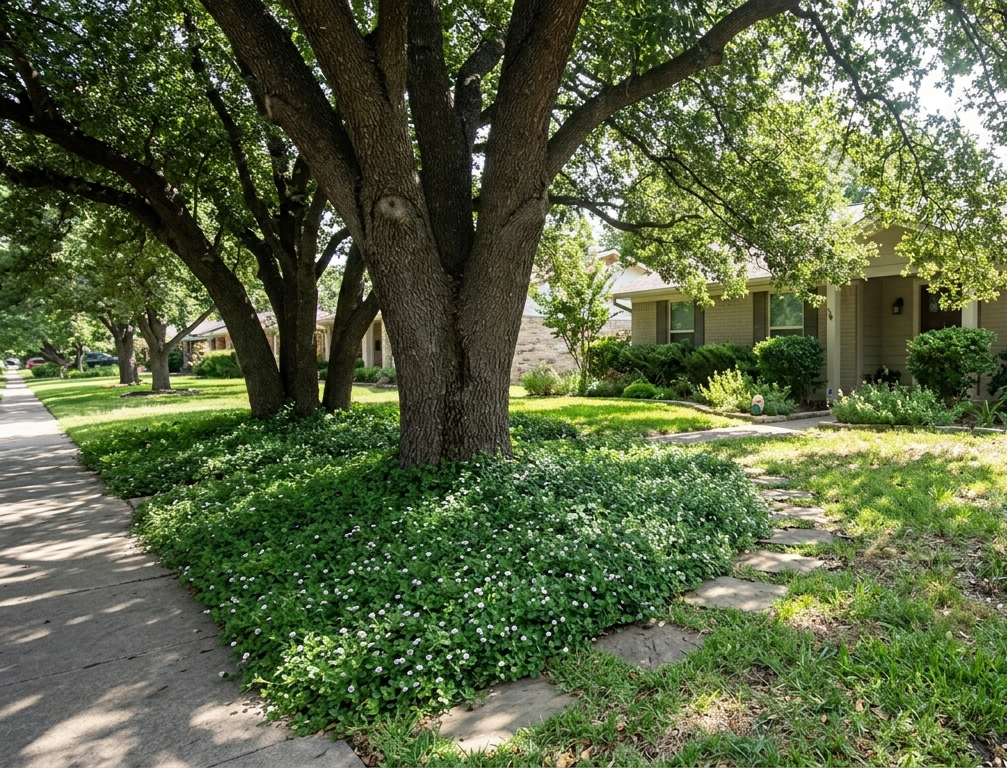
Our Extension office has received a few queries over the winter period from both Willco residential homeowners and some HOAs regarding the potential of substituting “green” ground covers in place of turf grass. This query was related to older established communities with mature oaks and elms and cool shady conditions resulting in thin and patchy lawns.
Properties that receive under 4 hours of bright sunshine/day have weak spindly grass growth that cannot thrive nor compete against weeds or fungal diseases. It is a losing battle trying to maintain a lawn under these conditions. Resodding turf without correcting the shade issue, will not solve the problem even if you grow higher shade “tolerant” turf species like the new St. Augustine variety Cobalt. Cobalt is a new A&M release sold as plugs or sod. It will still require 4-5 hrs. of direct (non-filtered) sunshine to thrive, so possibly some properties can be trimmed to open the canopy enough to gain sunshine. If not, read on for suggested groundcovers you may want to consider.
Select a clear day and track how much full sunlight reaches your property. Map out the duration of direct sunlight that your property receives. Mark out the zones as Full Sunlight (>4hrs), Deep Shade (<2 hrs.), Bright Shade (dappled light 2-3 hours), and Part Shade (3–4 hrs.).
On areas that receive less than 4hrs of full sunshine it would be best to choose a ground cover instead of turf grass. Some HOAs now have relaxed their rules to allow for establishing an attractive and manageable ground cover instead of seeing patchy, struggling turf grasses. As drought and water restrictions become ever more common for Central Texas, the push to establish (green) shade-tolerant and low water-consuming native vegetation will eventually become the norm and probably may become mandated.
It is recommended to start with a mulch to protect the tree root flare. Apply a coarse shredded bark mulch (not compost) around your trees in a large ring. Make the mulched area as wide as you can around each tree and apply no more than a couple of inches of mulch over the plant roots. Do not place mulch against the tree trunk itself, which will injury the bark and negatively affect tree health.
Next select a couple of the some of the best short growing Native and Adapted Plant choices as ground covers, for these shady areas. Shorter growing ones include,
- Horse herb (Calyptocarpus vialis) 6-10”
- Frog Fruit (Phyla incisa) 6-8”
- Texas sedge (Carex texensis) 6-8”
- Liriope (Lirope muscari) 12-18”
- Mondo grass (Ophiopogon japonicus) (4-8”)
- Asian Jasmine (Trachelospermum asiaticum) (12-18”)
I know of at least one HOA that now allows frog fruit (a fast-spreading native groundcover) for shade conditions as a turf substitute.
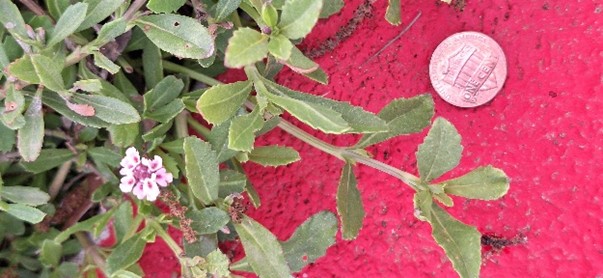
Close up of frog fruit starting to flower
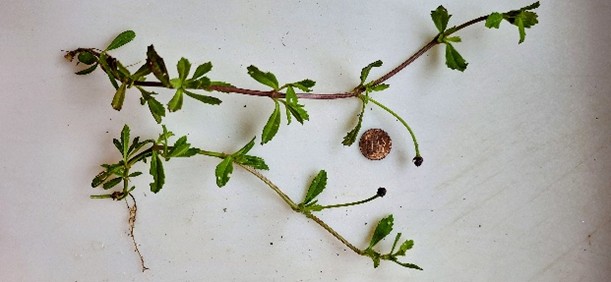
Growth of frog fruit plants 3 weeks following the last frost.
For more information on these and other choices visit the GrowGreen.org website. By developing a thoughtful plan and making a few judicious shade plant selections you can convert your struggling lawn into a low-maintenance, water-wise attraction in your community.
Gary Pastushok, Williamson County AgriLife Horticultural Extension Agent — Georgetown, TX
March 26, 2026

Gary Pastushok
County Extension Agent – Horticulture
Williamson County AgriLife Extension Office
Georgetown, Texas 78626
512-943-3300
https://williamson.agrilife.org
Disclaimer: References to products or treatments are for educational purposes only and do not imply endorsement by the Texas A&M AgriLife Extension Service or constitute medical advice.
Share This Story, Choose Your Platform!