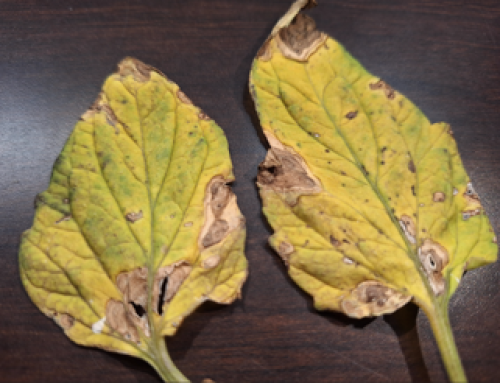


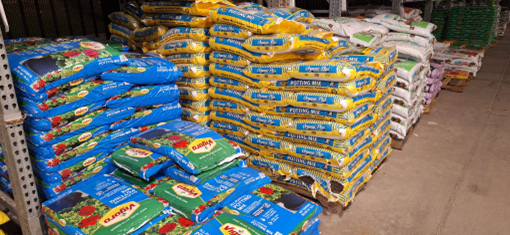
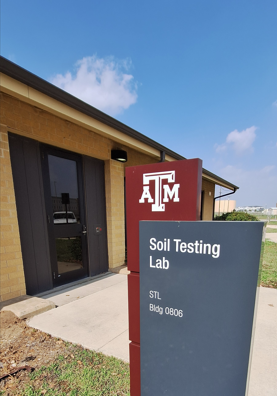
Our Master Gardener’s HelpDesk Volunteers are very busy this time of year and of course the most common question is what is wrong with this plant with an accompanying photo of the affected leaf. It is rare to see the soil conditions nor the basic fertility. Soil is the material that makes or breaks plant health. We encourage folks to conduct a routine soil test to assess the basic soil fertility. Testing is more important now than ever as price of fertilizer has nearly doubled in the past month and judicious use of fertilizer will reap benefits. (I know as I bought a bag this past weekend). The $12 charge for a routine soil test will be worth it. If you had not done a soil test in the past 2-3 years, it is time. Call our AgriLife Extension Office and we will walk you through the process to get this done and help you with interpreting the results. I took a couple of samples (both from the soil and the compost) from the Demonstration Garden where we are conducting a tomato variety trial. The test results stated not to apply any more compost nor fertilizer but to apply only a top up with nitrogen through the growing season. All the other nutrients were sufficient or in excess already from heavy use of compost over the years. This is very important to know as applying indiscriminate amounts of fertilizer or compost can harm plant growth.
Soil is a very complex material composed of four main components: air and water (about 50%), with the other 49% to 45% being inorganic minerals and the balance of the 1 to 5% being organic matter. Organic matter is the important biological fraction of soil composed of a blend of both living, dead and decomposing vegetation and microorganisms. A tablespoon of soil contains about one billion living microbes. (This is a good reason not to eat soil.) The organic matter is responsible for the overall health of the soil and responsible for the biological cycling of nutrients.
Back to fertilizer. The three key nutrients needed by plants are Nitrogen (N), Phosphate (P), and Potassium (K) and are represented on a fertilizer bag as the percent N-P-K. Nitrogen is the nutrient most needed and is largely responsible for the above portion of the plant growth; phosphate is the key nutrient for root development, and energy; and potassium provides overall general health, enzymes, fruiting and flowering.
 You can remember the role of these nutrients as N for the above the soil, P for the below the soil (rooting) and K for all-around plant health. These are needed in different quantities, roughly in the proportion of a 3:1:2 ratio. For instance, you should seek fertilizer sold in this ratio, like 15:5:10. This means 15% N; 5% P: 10% K. The brand of fertilizer does not matter, only the approximate ratio of nutrients. You will find out quickly that higher priced organic fertilizers are less concentrated and tend to provide a very slow release of nutrients to the plants over the season, something you may not be desiring.
Compost is purely the organic material derived from the biological breakdown of dead vegetation into a dark brown, crumbly textured, recycled material. Compost largely contains the breakdown products that were originally in the plants. Fully decomposed organic material overall can significantly improve soil health, texture, nutrition and water holding capacity. A little goes a long way, so add an inch or two of compost to the soil surface and incorporate it well into the soil. Using too much compost can cause problems like we have seen, where excessive salts and nutritional imbalances can develop in your soil. You can kill plants with too much of a good thing so use compost judiciously.
Happy Gardening.
Gary Pastushok, Williamson County AgriLife Horticulture Extension Agent

Gary Pastushok
County Extension Agent – Horticulture
Williamson County AgriLife Extension Office
Georgetown, Texas 78626
512-943-3300
https://williamson.agrilife.org
Disclaimer: References to products or treatments are for educational purposes only and do not imply endorsement by the Texas A&M AgriLife Extension Service or constitute medical advice.
Share This Story, Choose Your Platform!