

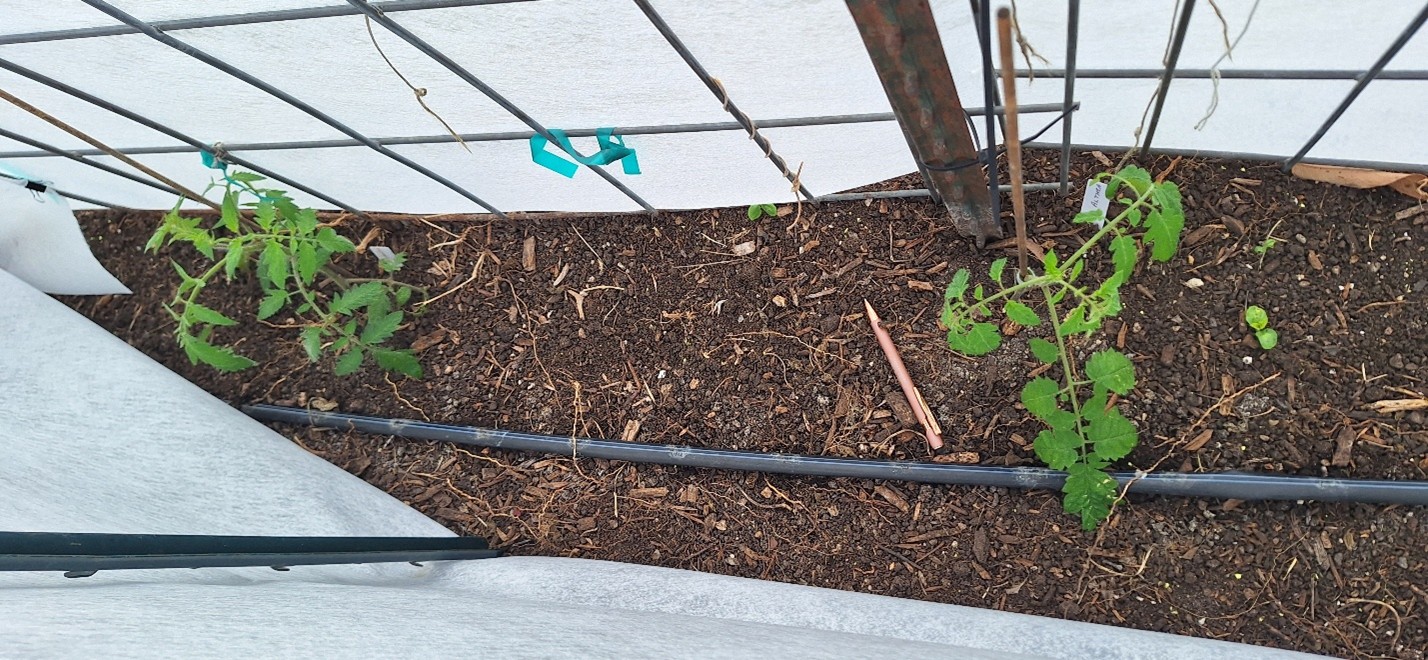
Photo 1. Tomato variety transplants (Left) CELEBRITY the semi-determinate and (Right) ATHENA the new all-purple variety. Photo taken Mar 4th just after transplanting. at the Master Gardener Demo Garden. Shows the drip irrigation setup, corral panel trellis, and protective wrap (guards against wind damage).
I know it seems it has been a bit since we had some brutally cold weather during Valentines Day weekend, however it is now prime planting time for tomatoes. Keep your plant covers/freeze blankets handy in case the night temperatures do drop below 40F though.
Tomatoes are by far the most popular vegetable in the USA. Estimates suggest that there are between 10,000 to 15,000 individual varieties available. To make it more complicated there are over 8000 types of tomatoes and three categories of tomatoes – confusing, huh? Read on and I will simplify your gardening life.
How lucky we are to have TWO tomato planting seasons in Central Texas – a late winter planting (in March) to produce a late springtime harvest; and a mid-summer planting (in July) for a fall harvest until frost. Unfortunately, each timing is met with challenges: from unpredictable late spring freezes which is followed by a small growing window before the heat sets in; or the mid-summer planting (in July) with intense heat issues that likely require shade cloth and extra irrigation needs.
We will focus on the early spring planting for this article. Early planting is critical! It is way too late now to plant tomato seeds. I suggest that you store your tomato seeds to plant later in the summer for fall production. Store those seed packets in a mason jar in a cool and dark place. Currently the stores are chock full of tomato transplants (which were started from seed in early January) have now reached about 12” tall. These should be hardened (or acclimatized) for 7-10 days prior to an outdoor planting in early March. An early planting increases the chance of fruit set before the daily high temperatures consistently exceed 90F and the nighttime lows exceed 70F. These hot temperatures cause the pollen to become sticky, which interferes with fertilization and halting any fruit production. Check your calendar and plant tags, as the normal maturity time from transplanting tomatoes into the ground to harvest time will be between 60 and 80 days.
There are 3 categories of tomatoes. The determinate tomatoes are bush types that need to be staked, flowers and fruit-set occur at the same time and finish quickly. A couple of reliable determinate varieties are BHN589 and Florida 91. The second category are the indeterminate tomatoes that grow all season, on long vines and produce fruit in a continuous fashion until the heat stops them. The Indeterminates should be grown on sturdy trellises (like cow panels) to support the long vines and fruit. The third category is the semi-determinates that are in between and includes the most popular Texas tomato variety called Celebrity. This medium size slicer is suitable for beginners, tasty, easy to grow and a heavy producer. I was told that if well managed the Celebrity tomato has a potential yield of 72 pounds of fruit per plant (however a very notable Horticulturalist in Texas worked hard at it and managed just over 50lb/plant). This is the fun of gardening.
Other important hints for successful tomato production include,
- When buying transplants (save your money) and avoid the sorry-looking clearance-bin plants. Tomatoes have been bred to grow non-stop. Any leggy, wilted, chlorotic, diseased plants will not produce. Maintain an even watering and fertility program. Select a balanced fertilizer, be careful not to add too much nitrogen that can stimulate excessive foliage instead of fruit production.
- Do a soil test if you haven’t done one in the past 2-3 years.
- Mulch around the plants to eliminate soil splash that can be the source of diseases. Mulch will keep the soil moist, conserves water, and cools plant roots.
- Prune tomato leaves and branches judiciously, as leaves provide shade protecting the fruit from the scorching effects of direct sunlight, and lastly,
- Enjoy the tomato growing experience!
Happy Gardening
Gary Pastushok, Williamson County Horticulture Agent

Gary Pastushok
County Extension Agent – Horticulture
Williamson County AgriLife Extension Office
Georgetown, Texas 78626
512-943-3300
https://williamson.agrilife.org
Disclaimer: References to products or treatments are for educational purposes only and do not imply endorsement by the Texas A&M AgriLife Extension Service or constitute medical advice.
Share This Story, Choose Your Platform!